

 French (FR)
  English (UK)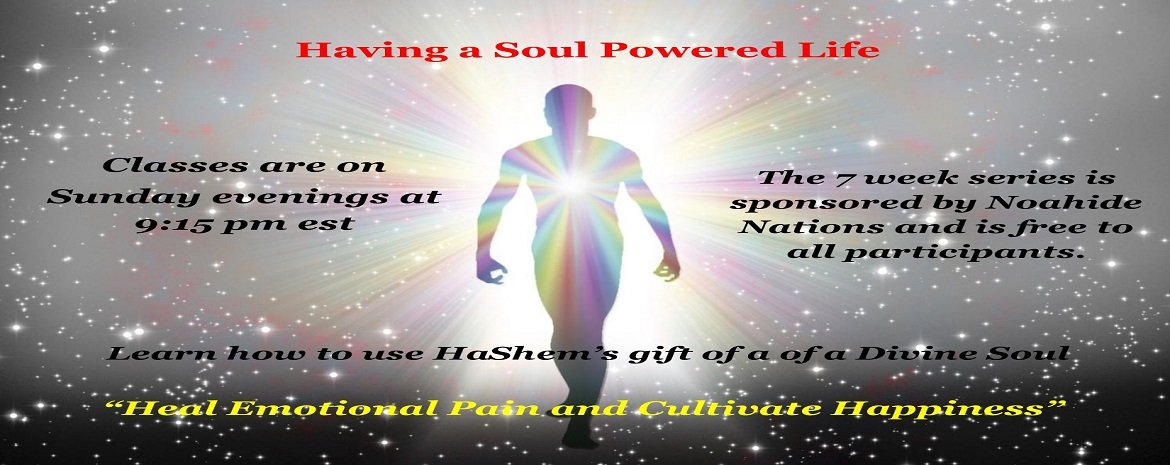


















 Choosing a Rabbi
 What Is Tzedakah?
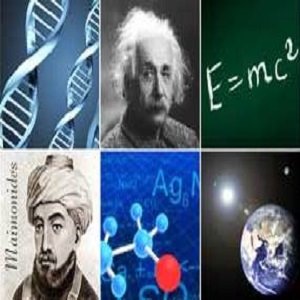 The Science in Torah
 Why Study Torah?
 Afterlife, Moshiach & Redemption
 Your Soul
"The two best days of your life are the day you were born and the day you find out why."
"How long is it our duty to study Torah? Until the day of death." Rambam
Noahide Torah Courses
Noahide Nations has conducted nearly 3000 live online Torah classes over the past 15 years. Many of these classes are available in audio recordings. Here are just some of these courses.
God's Instructions
When God created man on the 6th day He wanted mankind to live in peace and harmony, through His Mercy. He gave Adam 6 instructions in order to live this way. After the flood He gave Noah a 7th. These are the Noahide Commandments.
Read More +
Noahide Prayer
For Noahides, prayer is considered a mitzvah when performed in response to personal needs or circumstances.
Read More +
Develop a Torah Personality
Help for perfecting your relationship with HaShem and yourself.

Read More +
Listen To Noahide Laws & Life Cycle Class
Listen to the overview from a previous class from the Noahide Torah Study Yeshiva Course.
Read More +
Seek Torah Wisdom
Torah wisdom should always flow through you. Learn about Hashem and you will learn about yourself!

Read More +
After The Flood
Ever wonder what happened when Noah and his family exited the Ark after the Flood?
"To the world you might be one person, but to one person you just might be the world".
"Tzedaka may not save us, but it makes us worth saving"
"The only thing necessary for evil to exist is for good people to do nothing."
Wisdom From Pirke Avot
Simon the Just…used to say,
“Upon three things the world stands:
On Torah, on (Divine) Service, and on Deeds of Lovingkindness.”
Pirke Avot 1:2
Ben Zoma said,
“Who is wise? The one who learns from all people…
“Who is mighty? The one who subdues the evil inclination…
“Who is rich? The one who rejoices in his portion….
“Who is honored? The one who honors other human beings….”
Pirke Avot 4:1
The Most Important Part of Studying Torah
The most important element in validating interpretations of the written and oral Torah is the concept of Mesorah. Mesorah is the greatest proof to the authenticity of any concept, practice, or interpretation.
Although the seven Noahide laws have their origins in Adam and Noah, God chose to transmit and preserve them via Moses and the giving of the Torah at Sinai. This placed the Seven Mitzvos within the structure and system of Torah study and learning. Therefore, the seven Noahide laws must be interpreted and understood within the context of the Torah.
This point cannot be stressed enough: Jewish, and therefore Noahide, study and interpretation of the Torah is unique and unlike the study of any other religious texts.
The Truth About the Ger
Don't ever be afraid of seeking truth or speaking the truth, as it says in
Proverbs 12:19...
Truthful lips will be established forever, But a lying tongue is only for a moment
Are Noahides Allowed to Pray?
For Noahides, prayer is considered a mitzvah when performed in response to personal needs or circumstances. If one experiences challenges for which he does not pray, his lack of response is tantamount to a denial of God as the sovereign ruler of all things and all events. When one does pray in such circumstances, it demonstrates reliance and belief in the Creator.
When a Noahide prays to give thanks or praise absent a personal need, he still receives reward for such prayer even though it is not of the same nature as prayer prompted by personal needs.
As with all personal prayers, there are no fixed texts for Noahide prayer. Since all Noahide prayer is essentially personal prayer, it is ideally expressed using sincere words from the heart.
Tools For Noahide Torah Study
The journey of Noahide Torah study is endless in depth and has no destination. You will realize this when your very essence proclaims, "the more I learn, the less I know"! Before you make this proclamation remember that it is a mitzvot for a Noahide to study the Noahide Laws and apply them in every aspect of their life. After you make that proclamation you will realize and appreciate why it is a mitzvot for a Noahide to study the Noahide Laws and apply them. The study of Torah is what gives us our awe of the Creator. The more we study the more awe we gain.
Al Chet 1
- Category: Al Chet (Confession)
- Hits: 4718
Rabbi Shraga Simmons
1. For the mistakes we committed before You under duress and willingly.
How can we be held accountable for mistakes committed under duress?! The answer is that sometimes, we get into compromising situations because we are not careful. Many of these "accidents" can be avoided by setting limitations to avoid temptation.
Ask yourself:
Duress:
Did I put myself into compromising situations, and then when I got into trouble rationalize by saying it was "unavoidable" or "accidental"?
Have I tried making "fences" so that I won't transgress?
Have I considered setting up a penalty system as a deterrent against certain mistakes?
When I legitimately got into an unavoidable situation, did I stop to consider why God might want me to experience this particular challenge?
Willingly:
Did I make mistakes because I was lazy, or because my lower, animalistic urges were getting the better of me?
Al Chet
The 44 Roots of Mistakes
by George Brock
- For the mistakes done willingly or under duress....
- The battle is between good thoughts, words, and actions versus evil thoughts, words, and actions.
- The cause is laziness and animalistic urges getting the best of one because of sadness.
- Sadness is the beginning of every downfall.
- Sadness is the dust of the snake - the cause of depression and apathy.
- The victory comes when one realizes one cannot unscramble the eggs (one can't change the past but one can do T'shuvah).
- Thoughts, words, and actions are our spiritual garments - T'shuvah is keeping one's garments pure.
- T'shuvah comes when the flame (fear) of G-d in one's heart purifies one's mind (love) of G-d.
- This creates the thunder in one's voice that strengthens one's crooked heart and creates the feeling of joy that fills one's heart.
|
Thoughts |
Words |
Actions |
|
Spiritual Awareness Revelation of G-d |
Prayer How One Connects with G-d |
Mitzvot How G-d connects to You |
|
It is to hear and to see spiritually |
Prayer is synonymous with faith (emuna) |
When one performs the mitzvot with joy, with no expectation of future rewards, G-d will clothe Himself in your mitzvot and make the world a better place |
|
Torah reveals G-d |
Everything comes from G-d |
|
|
Sin conceals G-d |
Everything is for one's ultimate good |
|
|
Everything is for a purpose |
- The goal of Torah, service, and kindness (thoughts, words, and actions) is to make the world a better place; sharing God's good and creating great joy.
- "If one would connect oneself to one's Creator by practicing T'shuvah for the forgiveness of one's sins - studying Torah to increase one's spiritual awareness and practice one's mitzvah to make the world a better place - one would create great joy by removing all sadness and desires to willingly sin, even under duress.”